A Rainy Afternoon, No New Gear Required
A rainy afternoon indoor movement plan brings a little activity into a wet day: use the space and clothes you already have, then stop when it suits you.
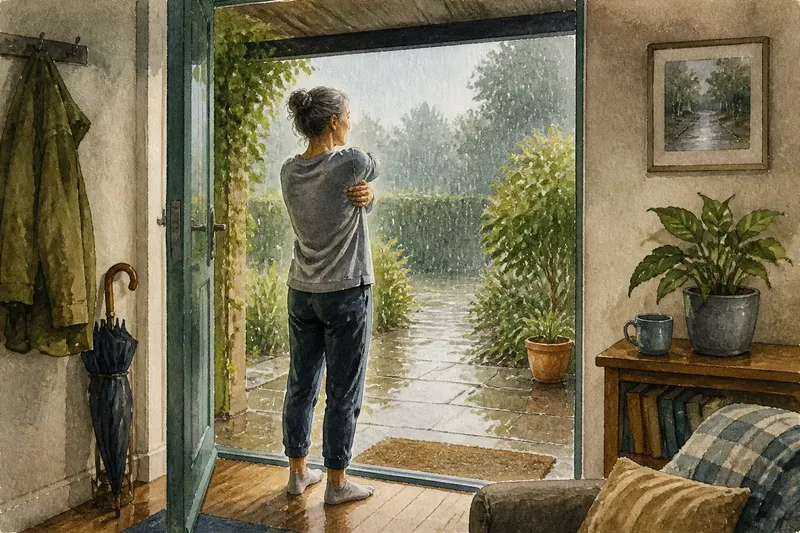
Rain taps against the window, and the usual walk can wait. A rainy afternoon indoor movement plan can still include a little time outside: step onto a sheltered porch, covered path or garden doorway, then return indoors when the weather or your comfort calls for it. No new gear is needed.
The aim is not to turn bad weather into a challenge. Choose a sheltered place you can reach safely, use ordinary clothing that feels comfortable, and keep an easy indoor alternative ready. If the route is slippery, exposed or otherwise unsuitable, stay in and move in the space you have.
Choose a sheltered outdoor spot that suits the weather
Look for a place close to home where you can pause out of the rain: a covered entrance, a sheltered balcony or a porch, for example. Check the surface and the route before you set out. If leaves, puddles or poor visibility make the way uncomfortable, choose an indoor option instead.
Decide what the spot is for. You might stand under cover and gently shift your weight, walk a short clear path, or simply step outside for a breath of fresh air and a few relaxed movements. Keep the activity modest enough that you can return indoors without needing to push through worsening weather.
Use what you are already wearing if it feels suitable for the conditions. A coat or umbrella you own may help with a brief trip to cover, but buying specialist clothing or equipment is not part of the plan. If the available footwear feels unstable on a wet surface, do not walk there; choose a dry indoor space instead.
Make the route easy to leave
Before going out, look from the door towards the sheltered spot. Move aside only small obstacles that are easy to shift, and leave a clear path back. There is no need to rearrange furniture or prepare a long route.
Choose a simple stopping cue, such as reaching the covered entrance or deciding that the rain has become uncomfortable. Treat it as a chance to pause, not a target you must meet. You can turn back at any point.
For a very short outdoor pause, a phone, timer or music is optional. Keeping your hands free may make the doorway or path easier to manage. What is not worth the effort is searching for a special routine or waiting for perfect weather when the nearby route is already unsuitable.
Start gently and adapt to the conditions
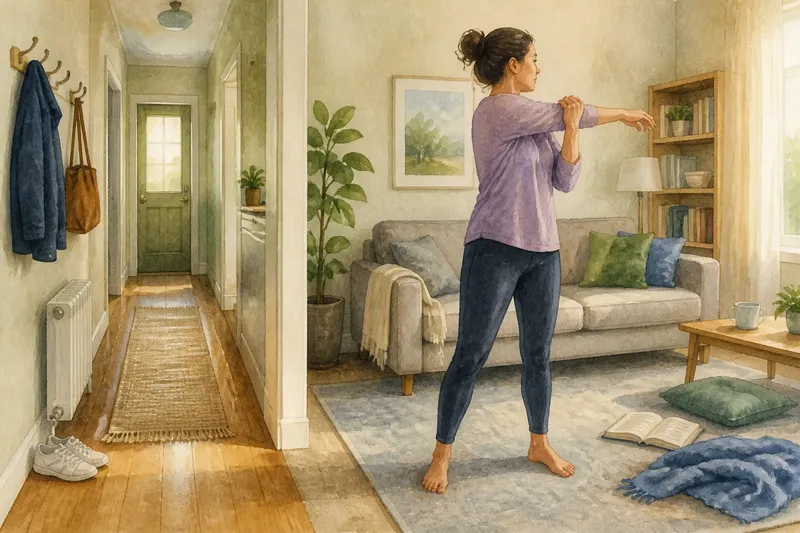
Begin with a comfortable posture and easy movements. Under cover, you might loosen your shoulders or shift your weight from one foot to the other. If you walk, take a pace that lets you turn and return without rushing.
Pay attention to the surface, wind and your own comfort. If the ground feels slick, the rain blows into the sheltered area, or you feel unsteady, go inside. There is no benefit in carrying on merely because you planned to step out.
Say you are at home on a rainy afternoon and your porch is dry, but the paving between it and the garden is wet. You decide not to cross the paving. Instead, you stand just inside the open doorway, move your shoulders gently, then close the door when the draught feels uncomfortable. The observable result is a brief change of posture without taking a risk on the slippery route.
Choose an indoor alternative when outdoor conditions are poor
If there is no sheltered, clear route, stay inside. A chair can support seated shoulder or ankle movements, while a clear patch beside a sofa may suit gentle standing movement. Keep a stable surface within reach if you need support, and choose a seated option if standing does not feel steady.
Wear the clothes you already have on if they allow comfortable movement. Socks can slide on some floors, so avoid standing movements if your footing feels uncertain. Do not buy footwear or other equipment for this small activity; change the movement or remain seated instead.
In either setting, slow down, pause or stop whenever you want. If a health concern or discomfort affects what is appropriate for you, adapt the activity and seek advice from a qualified professional where needed.
What should you do when rain changes the plan?
Can I step outside without a covered area?
Only if the route and surface feel safe and comfortable for the conditions. If rain makes the ground slippery or the weather unpleasant, stay indoors and choose a seated or clear-floor movement instead.
Do I need special clothes or footwear?
No new gear is required for this plan. Use what you already have if it suits the weather and feels stable; if it does not, avoid the wet route and move indoors.
What if I have only a doorway or balcony?
A small sheltered spot can be enough for a pause and a few gentle movements. Keep the doorway clear, remain away from a wet edge, and return inside if the space feels exposed or awkward.
When should I stop?
Stop when the route, weather or movement no longer feels comfortable, or simply when you are ready to go inside. A planned stopping cue is a reminder that you can choose again, not a minimum you must reach.
Keep the next part of the day ordinary
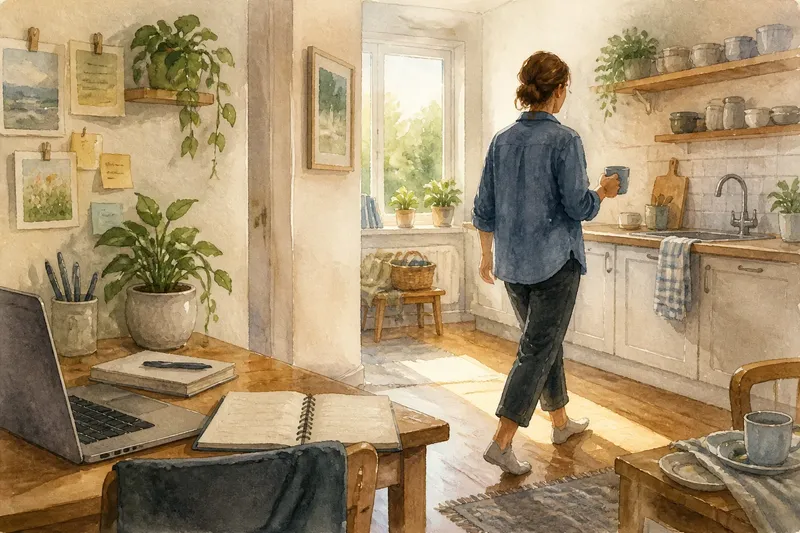
When you come back inside, leave the entrance clear and dry any wet patch that could make the floor slippery. Then return to what you were doing: make a drink, pick up your book or sit by the window.
A rainy afternoon indoor movement plan can include a sheltered outdoor pause, but it should never depend on forcing a route that feels unsafe. The useful decision is often the simplest one: use the cover available, or stay inside and choose a movement that fits the space.